The Valley Spirit Never Dies: What the Ancient Tao Can Teach Us About Power, Life and Surrender By Acharya Sailyajit®
There is a particular kind of wisdom that does not arrive with noise.
It does not announce itself from a throne. It does not demand obedience. It does not shout to prove its strength.
It flows quietly.
Like a river.
Like breath.
Like the mysterious force that allows a seed to break open beneath the soil and become a tree.
The ancient Chinese philosopher Lao Tzu expressed this profound idea in the Tao Te Ching through the image of the Valley Spirit—the mysterious, receptive, feminine principle from which life continuously emerges.
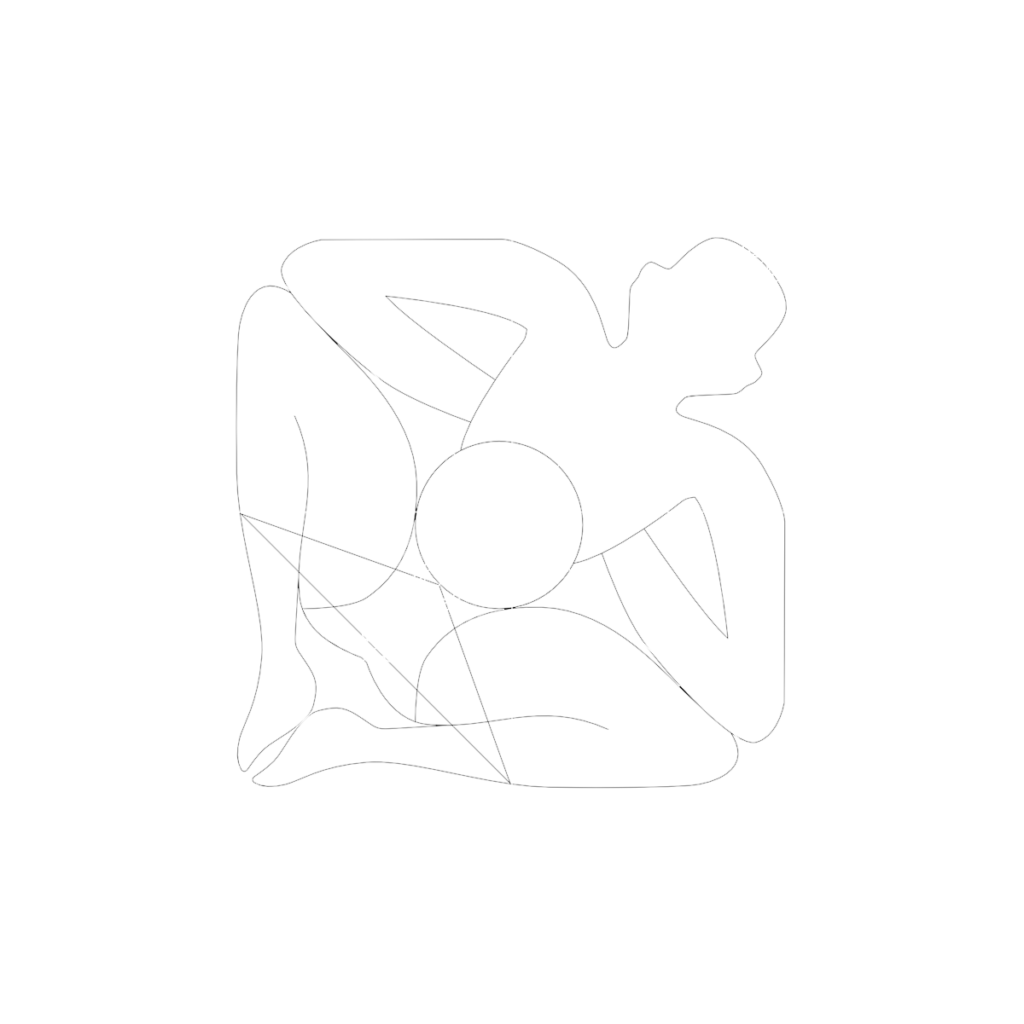
The image before us captures this philosophy beautifully: mountains rising toward heaven, a river descending through the valley, a solitary seeker sitting quietly beside the water, and at the centre—the Mysterious Female, the hidden source of creation.
It is more than an artistic composition.
It is a philosophy of existence.
The Valley Is Powerful Because It Is Empty
We normally associate power with height.
The mountain is high.
The king sits above his subjects.
The successful person stands at the top.
The tallest building dominates the skyline.
Human civilization has spent thousands of years climbing upward.
But Taoist wisdom asks us to look downward.
Look at the valley.
The valley does not compete with the mountain.
It does not try to become taller.
It simply receives.
Rain comes to the valley.
Rivers come to the valley.
Seeds grow in the valley.
Animals find shelter in the valley.
Civilizations flourish around rivers and fertile plains.
The valley appears empty, but that emptiness makes it capable of receiving everything.
This is one of the great paradoxes of Tao.
What appears empty may actually be full of potential.
In modern life, we are uncomfortable with emptiness.
We fill every silence with conversation.
Every moment with a screen.
Every uncertainty with an opinion.
Every space with possessions.
Every pause with anxiety.
But sometimes the most productive thing a human being can do is simply leave space.
Space for thought.
Space for intuition.
Space for another person.
Space for life to reveal its next direction.
The Mysterious Female: The Principle of Creation
The Tao Te Ching uses the expression “Mysterious Female”—玄牝 (Xuán Pìn).
This should not be understood merely as biological femininity.
It is a philosophical symbol.
It represents the receptive, generative, nurturing principle of existence.
Before something becomes visible, it must exist invisibly.
Before the tree, there is the seed.
Before the building, there is the drawing.
Before the book, there is an idea.
Before a transformation in life, there is usually a quiet movement within consciousness.
Creation begins in darkness.
The womb is dark.
The soil is dark.
The night sky is dark.
Yet darkness is not necessarily the absence of life.
Sometimes darkness is where life is preparing itself.
This is why ancient traditions repeatedly honoured the feminine principle—not simply as woman, but as Shakti, Prakriti, Mother Nature, the creative matrix of existence.
The masculine principle may represent direction, consciousness and structure.
The feminine principle represents manifestation, nourishment and becoming.
Neither is complete without the other.
The Tao Does Not Behave Like a King
One line from the image particularly caught my attention:
“Not a ruler. Not a father. Not a command. But the source that nourishes all things.”
This is a radically different understanding of ultimate power.
Human beings generally understand authority through command.
A king says: “Do this.”
A government says: “Follow the law.”
A manager says: “Complete the task.”
A military commander says: “Advance.”
But nature rarely commands.
The sun does not order the lotus to bloom.
The moon does not instruct the ocean to rise.
The river does not hold meetings before flowing toward the sea.
The tree does not negotiate with spring.
Life simply unfolds according to its deeper nature.
This is Wu Wei—often translated as non-forcing or effortless action.
It does not mean laziness.
It does not mean doing nothing.
It means acting without unnecessary resistance to the natural movement of things.
That distinction is crucial.
Strength Is Not Always Hard
We have been conditioned to believe that strength must be hard.
Stone is strong.
Iron is strong.
A rigid wall is strong.
But water is perhaps the greatest teacher of another kind of strength.
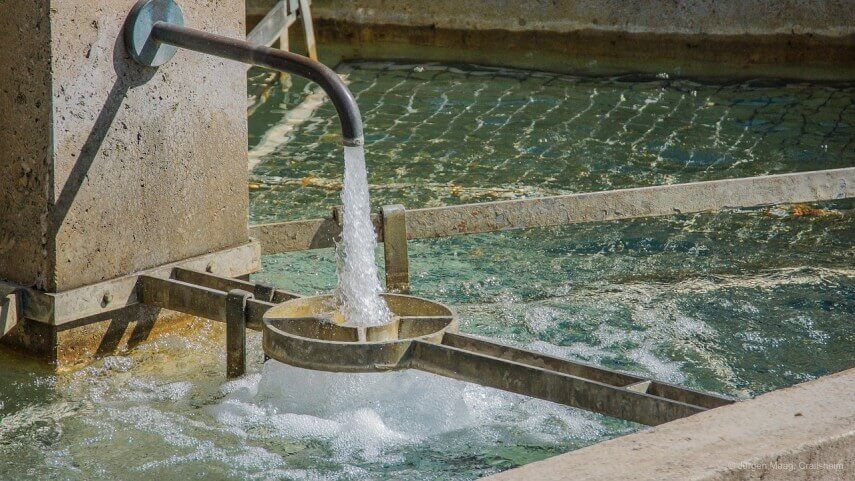
Water is soft.
Yet it can carve mountains.
It is flexible.
Yet it can destroy concrete.
It takes the shape of whatever contains it.
Yet it eventually finds a way beyond every container.
Water does not defeat the rock by becoming harder than the rock.
It defeats the rock by remaining water.
There is a lesson here for human beings.
Sometimes we spend years fighting circumstances by becoming increasingly rigid.
We become harder.
More defensive.
More suspicious.
More controlling.
More argumentative.
And eventually we confuse rigidity with strength.
But perhaps real strength is the ability to remain soft without becoming weak.
To remain compassionate without becoming foolish.
To remain flexible without losing principles.
To bend without breaking.
The Mountain and the River
Look carefully at the landscape in this image.
The mountains appear ancient and immovable.
The river is constantly moving.
One represents stability.
The other represents change.
Human life requires both.
Without stability, we become scattered.
Without movement, we become stagnant.
This is also deeply relevant to Vastu and traditional spatial philosophy.
A healthy space is never merely about walls and directions.
It is about relationship between stability and movement, mass and emptiness, containment and circulation.
A mountain-like quality is needed where stability is required.
A river-like quality is needed where movement, drainage, circulation and transformation are required.
The ancient sciences understood something modern architecture sometimes forgets:
Space is not dead. Space participates in human experience.
A room can feel heavy.
A corridor can feel blocked.
A courtyard can feel liberating.
A window can change the psychological character of an entire space.
The physical environment and the human mind are not isolated systems.
We live inside our spaces, and eventually our spaces begin to live inside us.
Why Do We Fear Surrender?
Perhaps the most difficult lesson of Tao is surrender.
Not surrender as defeat.
Surrender as trusting the larger movement of existence.
There is a difference.
Defeat says:
“I cannot do anything.”
Surrender says:
“I will do what is mine to do, and I will stop trying to control what is not mine.”
That is maturity.
A farmer can prepare the soil.
He can plant the seed.
He can irrigate the field.
He can protect the crop.
But he cannot command the seed to grow faster by shouting at it.
Some things require participation.
Other things require patience.
This is true in relationships.
In business.
In spirituality.
In healing.
In creativity.
And even in destiny.
There are moments when action is necessary.
There are also moments when waiting is the action.
Knowing the difference is wisdom.
The Solitary Seeker Beside the River
The tiny human figure sitting beside the enormous landscape is perhaps my favourite part of this image.
He is small.
The mountains are enormous.
The river is ancient.
The sky is infinite.
And yet he is not insignificant.
He is simply in his proper proportion.
Modern civilization constantly tells us:
“Become bigger.”
Bigger house.
Bigger business.
Bigger following.
Bigger bank balance.
Bigger influence.
Bigger recognition.
But spiritual traditions often ask a different question:
Can you become deeper?
Depth is different from size.
A small lamp can illuminate a dark room.
A quiet person can carry tremendous wisdom.
A single decision can alter an entire life.
A moment of awareness can transform years of unconscious behaviour.
The seeker beside the river does not need to conquer the mountain.
He needs to understand himself.
The Ancient Wisdom of Becoming Less
Perhaps this is the uncomfortable truth of Taoist philosophy:
Growth sometimes means removing rather than acquiring.
Remove unnecessary desire.
Remove unnecessary fear.
Remove unnecessary competition.
Remove unnecessary ego.
Remove unnecessary noise.
Remove the need to prove yourself.
What remains may be closer to your authentic nature.
This principle appears in many ancient traditions.
In Indian philosophy, we encounter Neti Neti—“not this, not this.”
The seeker gradually removes false identifications to discover what remains.
In Yoga, we speak of stilling the fluctuations of the mind.
In Buddhism, attachment becomes a central subject of contemplation.
In Taoism, the sage learns to return to simplicity.
Different civilizations used different languages.
But perhaps they were pointing toward a similar mountain.
The Tao and the Art of Leadership
There is another lesson here that modern leaders should take seriously.
The strongest leader is not necessarily the person who controls everything.
A mature leader creates conditions in which others can flourish.
A good architect does not force people to behave unnaturally inside a building.
A good teacher does not manufacture disciples who depend permanently upon the teacher.
A good parent does not spend life controlling an adult child.
A good business leader does not become the bottleneck through which every decision must pass.
And a genuine spiritual teacher should ultimately help a seeker discover his or her own inner compass.
Leadership at its highest level becomes almost invisible.
Like the valley.
Like water.
Like the Tao.
The Way of the Valley
The image describes the valley as:
Lowly yet profound.
Receptive yet powerful.
Empty yet fertile.
Soft yet unstoppable.
That is an extraordinary definition of wisdom.
The world often rewards the opposite qualities.
Be aggressive.
Be loud.
Be first.
Be visible.
Be dominant.
But nature repeatedly demonstrates another strategy.
The seed waits.
The river flows.
The mountain stands.
The moon reflects.
The forest regenerates.
The Tao does not hurry.
And yet everything happens.
Perhaps We Need Less “Heaven Above” and More “Valley Within”
The final statement in the artwork is provocative:
“The ultimate source is not a Father in Heaven. It is the Valley Spirit.”
Whether one accepts that literally, metaphorically, philosophically or poetically, it invites a serious question:
Where do we believe life comes from?
Do we imagine the ultimate reality as a distant authority sitting above us?
Or can we experience the sacred as an intelligence permeating nature itself?
For me, the second possibility is profoundly beautiful.
The sacred may be found in the mountain.
In the river.
In the silence between two thoughts.
In the breath.
In the mother holding her child.
In the farmer touching the soil.
In the architect drawing the first line.
In the astrologer looking at the heavens and trying to understand the rhythm of time.
In the seeker sitting quietly before dawn.
Perhaps the divine does not always speak from above.
Perhaps sometimes it speaks from within the valley.
Returning to the Source
We spend much of our lives moving away from simplicity.
We accumulate knowledge, possessions, titles, ambitions and identities.
Then, somewhere along the journey, many of us discover that the things we were desperately searching for were hidden beneath all the noise.
The Taoist sage does not necessarily escape the world.
He learns how to move through it without becoming imprisoned by it.
That is the real challenge.
To live fully without becoming possessed by what we possess.
To work hard without worshipping work.
To love without trying to own.
To lead without dominating.
To build without forgetting nature.
To seek knowledge without losing wisdom.
To become successful without becoming spiritually poor.
The river in this ancient landscape gives us the answer.
It does not fight the valley.
It does not resist gravity.
It does not ask permission.
It simply flows.
And eventually, every river returns to something larger than itself.
Perhaps human life is the same.
We come from a mystery.
We travel through mountains and valleys.
We carry our small stories for a while.
And eventually, we return to the mystery from which we came.
The Valley Spirit never dies.
Maybe the real spiritual journey is not learning how to become something extraordinary.
Maybe it is learning how to return to what was quietly present within us all along.
Acharya Sailyajit®
Occult Mentor | Astrologer | Vastu Consultant | Numerologist | Writer
“Do not always search for power in the heights. Sometimes the greatest power is found in the valley—the place that receives, nourishes, transforms and quietly gives life.”
... See MoreSee Less
From compassion comes responsibility.
After making my first contribution to the Assam Flood Relief efforts, I have decided to take one more step.
I pledge that 100% of my Astrology Consultation fees received from 1st August to 15th August 2026 will be donated to the Chief Minister's Relief Fund, Assam, to support our brothers and sisters affected by the devastating floods.
Every consultation during this period will become a small act of hope and a contribution towards rebuilding lives.
I invite everyone, in whatever capacity possible, to extend a helping hand. Together, we can make a meaningful difference.
Government is the channel through which we can support the right and the needy people.
With prayers for the people of Assam,
Acharya Sailyajit Baruah
Occult Mentor®️ | Astro Sailyajit®️ | Sailyajit Vastu™️
... See MoreSee Less
Can a Bonsai Really Bring Good Luck? The Ancient Secret Behind the World's Smallest Trees By Acharya Sailyajit
Every time I visit South East Asian cities, resorts, and hotels, I notice the same thing.
A beautifully shaped bonsai sits proudly on a coffee table, reception desk, or balcony, and within minutes someone asks me,
"Acharya Ji, is keeping a bonsai lucky or unlucky?"
It is one of the most debated questions in Feng Shui and Vastu.
Some people believe a bonsai attracts prosperity. Others say it restricts growth because the tree is intentionally kept small. So, what is the truth?
The answer isn't as simple as a "yes" or a "no."
Like most things in nature, the energy of a bonsai depends on how you understand it, where you place it, and how you care for it.
A Tiny Tree with a Remarkable History
Many people assume bonsai is a Japanese invention. Surprisingly, its story began much earlier in ancient China, over two thousand years ago.
The Chinese practised an art called Penjing, creating miniature landscapes that reflected mountains, forests, rivers, and the balance of nature itself. Buddhist monks later carried this tradition to Japan, where it evolved into what we now know as Bonsai.
The word itself is beautifully simple:
• Bon means a shallow tray.
• Sai means a tree or plant.
A bonsai isn't a genetically dwarf tree. It's a normal tree carefully trained over many years through pruning, wiring, and patient cultivation. Every bend in its trunk tells a story. Every branch reflects years of dedication.
Perhaps that's why bonsai has always symbolized something far greater than its size.
Does a Bonsai Bring Good Luck?
My answer is always this:
A healthy bonsai doesn't create luck—it represents the qualities that often lead to it.
Patience.
Discipline.
Balance.
Consistency.
Prosperity rarely arrives overnight. Like a bonsai, it grows slowly when nurtured with care.
In Feng Shui, a vibrant, healthy bonsai is believed to attract positive Chi, creating an atmosphere of peace and steady progress. But the opposite is equally true.
A dried, neglected, or dying bonsai sends an entirely different message.
It reflects neglect, stagnation, and declining life force.
If your bonsai has lost its vitality, don't keep it merely as decoration. Life attracts life.
Where Should You Keep a Bonsai?
Placement matters more than people realise.
The East – For Health and Family
This is my favourite location.
The eastern direction is associated with sunrise, renewal, and family harmony. A lush green bonsai here complements the Wood element and creates a calm, nurturing atmosphere.
The Southeast – For Wealth
If you own a business or want to strengthen financial opportunities, this is one of the most favourable directions.
A healthy bonsai placed here symbolises continuous, steady growth rather than sudden gains.
The North – For Career Success
For professionals, entrepreneurs, and students beginning a new chapter, the northern sector supports career movement and fresh opportunities.
The Northeast – For Learning and Wisdom
If you have a study room, meditation corner, or library, a bonsai can create a peaceful environment that encourages focus and contemplation.
Where You Should Avoid Keeping One
Not every corner of the house is suitable.
I generally advise against placing bonsai in:
• Bedrooms, where the space should feel deeply restful.
• Bathrooms, where energy is symbolically drained away.
• Dark corners without natural light.
• Areas where the tree cannot thrive.
Remember, the tree's health reflects the quality of energy it brings.
Which Bonsai Is Considered the Luckiest?
While every healthy bonsai has its own beauty, a few are especially popular.
Jade Bonsai is often associated with wealth and business success.
Ficus Bonsai represents strength, resilience, and longevity.
Chinese Elm symbolises wisdom and family harmony.
Fukien Tea Bonsai is admired for attracting peaceful and positive energy.
Choose a tree you genuinely enjoy caring for rather than chasing symbolic meanings alone.
What About Vastu?
This is where many people become confused.
Traditional Vastu Shastra generally celebrates natural, unrestricted growth. Trees growing freely in gardens and open spaces are often considered ideal because they symbolise expansion and abundance.
Since a bonsai is intentionally kept miniature through pruning and root management, some traditional Vastu practitioners interpret it as representing restrained growth.
That does not necessarily mean every bonsai is inauspicious.
In my experience, context matters.
If your home is filled with healthy plants, open spaces, sunlight, and positive energy, a well-maintained bonsai can be appreciated as an artistic expression of patience and harmony rather than a symbol of limitation.
Problems arise only when people neglect it.
A dying bonsai should never become part of your décor.
The Real Secret Behind Bonsai
People often search for lucky objects.
Lucky colours.
Lucky directions.
Lucky numbers.
Lucky plants.
But after years of studying Vastu, Feng Shui, and human behaviour, I've realised something important.
A bonsai doesn't teach us how to become lucky.
It teaches us how to grow.
Not with speed.
Not with shortcuts.
But with patience, care, resilience, and quiet determination.
Perhaps that's why this tiny tree has survived for centuries.
It reminds us that true strength is never measured by height—it is measured by character.
And sometimes, the smallest tree in the room carries the greatest lesson of all.
— Acharya Sailyajit
Occult Mentor | Astro-Vastu Consultant | Author
... See MoreSee Less